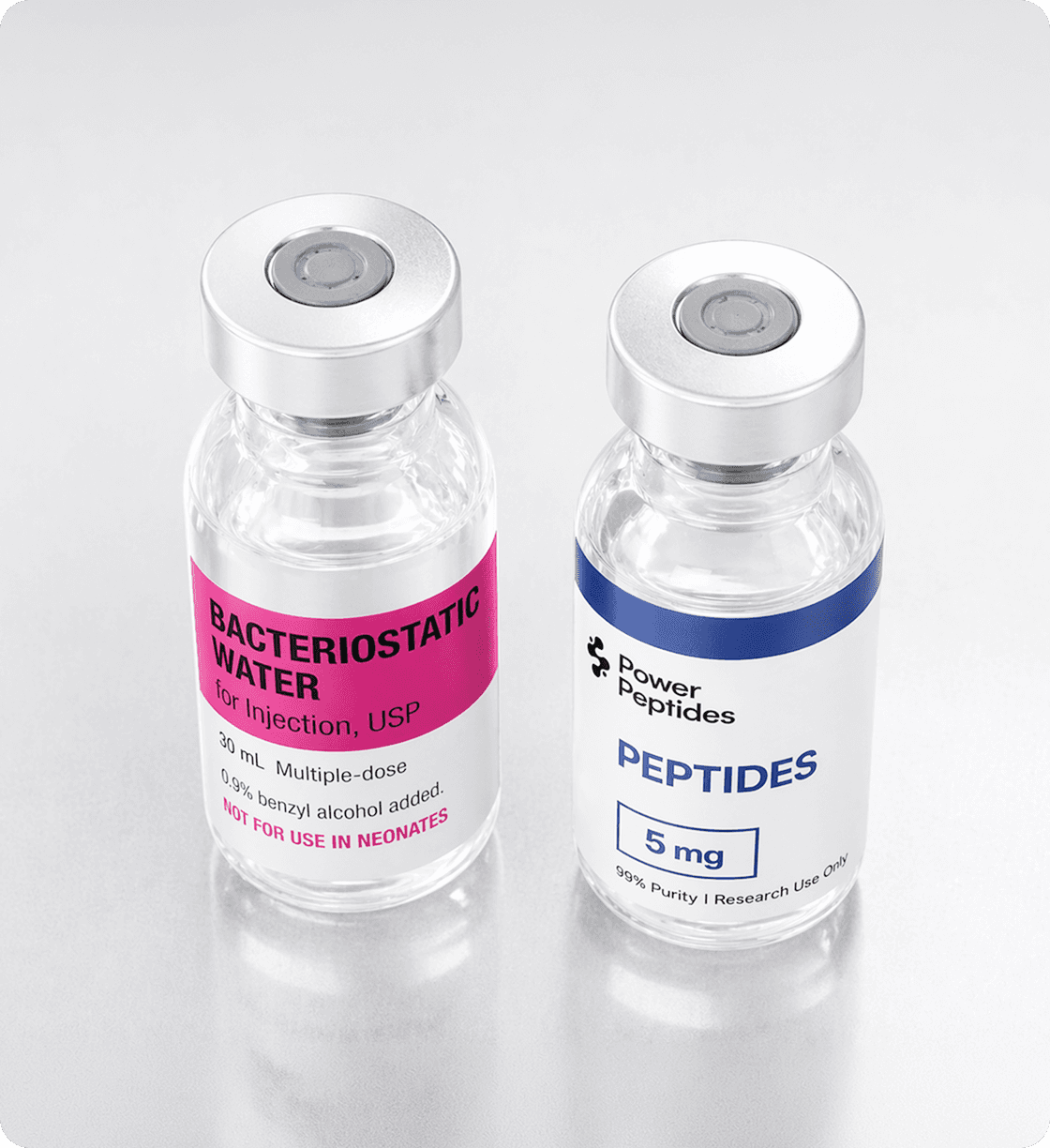
BestsellerBPC-157 Guide
$14BPC-157: mechanism, reported effects, commonly cited dosage ranges, reconstitution math and named stacks — gastrointestinal and tissue-repair research.
Edukative Bibliothek
Eine wachsende Bibliothek mit 55 edukativen Peptid-Guides und Dosierungs-Referenztabellen, mit einsteigerorientierten Schritt-für-Schritt-Erläuterungen, Hinweisen zur Einordnung im Forschungskontext und praktischen Lernwerkzeugen.

Einzel-Guide-Zugang
$14
Jeder verfügbare Guide
All-Access Lifetime
$99
Alle Guides — aktuelle + künftige Bibliothek
Beginnen Sie mit den beliebtesten edukativen Guides der Bibliothek und entdecken Sie anschließend den übrigen Katalog weiter unten.
BestsellerBPC-157: mechanism, reported effects, commonly cited dosage ranges, reconstitution math and named stacks — gastrointestinal and tissue-repair research.
BestsellerFree GHK-Cu guide for skin, tissue, and cosmetic research: how it works, what studies report, reported dosage ranges, half-life, side effects and reconstitution math.
BestsellerTB-500 explained — mobility and soft-tissue research. Evidence status, reported dosage ranges, reconstitution math, storage and named stacks.
BestsellerCJC-1295: mechanism, reported effects, commonly cited dosage ranges, reconstitution math and named stacks — growth-hormone-axis research.
Entdecken Sie die vollständige Peptid-Guide-Bibliothek. Jeder Guide folgt demselben edukativen Format und kann einzeln erworben werden.
Free Ipamorelin guide: how it works, what studies report, reported dosage ranges, half-life, side effects and reconstitution math.

Semaglutide explained — metabolic and GLP-1 research. Evidence status, reported dosage ranges, reconstitution math, storage and named stacks.

Tirzepatide: mechanism, reported effects, commonly cited dosage ranges, reconstitution math and named stacks — metabolic and incretin research.

Free Retatrutide guide: how it works, what studies report, reported dosage ranges, half-life, side effects and reconstitution math.

Tesamorelin explained — body-composition and endocrine research. Evidence status, reported dosage ranges, reconstitution math, storage and named stacks.

Sermorelin: mechanism, reported effects, commonly cited dosage ranges, reconstitution math and named stacks — growth-hormone-axis research.

Free Thymosin Alpha-1 guide for immune research: how it works, what studies report, reported dosage ranges, half-life, side effects and reconstitution math.

PT-141 explained — melanocortin research. Evidence status, reported dosage ranges, reconstitution math, storage and named stacks.

Oxytocin: mechanism, reported effects, commonly cited dosage ranges, reconstitution math and named stacks — social-bonding and reproductive research.
Free Epithalon guide for cellular-aging research: how it works, what studies report, reported dosage ranges, half-life, side effects and reconstitution math.

KPV explained — skin, gut, and inflammatory research. Evidence status, reported dosage ranges, reconstitution math, storage and named stacks.

Selank: mechanism, reported effects, commonly cited dosage ranges, reconstitution math and named stacks — neurocognitive research.

Free Semax guide for neurocognitive research: how it works, what studies report, reported dosage ranges, half-life, side effects and reconstitution math.

DSIP explained — sleep and neuroendocrine research. Evidence status, reported dosage ranges, reconstitution math, storage and named stacks.

Kisspeptin-10: mechanism, reported effects, commonly cited dosage ranges, reconstitution math and named stacks — reproductive-axis research.

Free ARA-290 guide: how it works, what studies report, reported dosage ranges, half-life, side effects and reconstitution math.

5-Amino-1MQ explained — metabolic research. Evidence status, reported dosage ranges, reconstitution math, storage and named stacks.

MOTS-c: mechanism, reported effects, commonly cited dosage ranges, reconstitution math and named stacks — mitochondrial and metabolic research.
Free SS-31 guide: how it works, what studies report, reported dosage ranges, half-life, side effects and reconstitution math.

IGF-1 LR3 explained — growth-factor and anabolic-signaling research. Evidence status, reported dosage ranges, reconstitution math, storage and named stacks.

Glutathione: mechanism, reported effects, commonly cited dosage ranges, reconstitution math and named stacks — oxidative-stress and detoxification research.
Free SLU-PP-332 guide: how it works, what studies report, reported dosage ranges, half-life, side effects and reconstitution math.

GHRP-2 explained — growth-hormone-secretagogue and ghrelin-receptor research. Evidence status, reported dosage ranges, reconstitution math, storage and named stacks.

GHRP-6: mechanism, reported effects, commonly cited dosage ranges, reconstitution math and named stacks — growth-hormone-secretagogue and appetite-signaling research.
Free Melanotan II guide: how it works, what studies report, reported dosage ranges, half-life, side effects and reconstitution math.

Mod GRF 1-29 / CJC-1295 no DAC: the only human CJC-1295 study tested the DAC version at 60-90 mcg/kg, the unmeasured half-life, unit math, and what a purity report can establish.
NA-Semax Amidate: mechanism, reported effects, commonly cited dosage ranges, reconstitution math and named stacks — neuroprotective and cognitive-signaling research.
N-Acetyl Selank Amidate: the +41 Da mass difference a certificate of analysis must show, why purity cannot establish identity, the salt-form correction to every concentration, and the two figures this page retracted.
Gonadorelin explained — hypothalamic-pituitary-gonadal (HPG) axis research. Evidence status, reported dosage ranges, reconstitution math, storage and named stacks.

Cagrilintide: the dosing chart in insulin-syringe units, the sourced 159-195 hour half-life, and what the 2026 REIMAGINE and REDEFINE phase 3 trials measured — including the 0.16-point HbA1c result.
Free NAD+ guide: how it works, what studies report, reported dosage ranges, half-life, side effects and reconstitution math.

LL-37 explained — antimicrobial, wound-repair, and immune-modulation research. Evidence status, reported dosage ranges, reconstitution math, storage and named stacks.

Cartalax (AED, Ala-Glu-Asp): the sequence it is actually indexed under, what its six published cell-culture studies tested, reported dosage ranges, reconstitution math and named stacks.

Free Thymalin guide for thymic and immune-modulation research: how it works, what studies report, reported dosage ranges, half-life, side effects and reconstitution math.

Thymulin (FTS-Zn): the zinc-dependent thymic nonapeptide — how it differs from Thymalin, what the two double-blind human trials actually found, published trial doses, reconstitution math and storage.

MGF, the IGF-1Ec E-peptide: two pharmaceutical companies could not reproduce its claimed effect, no half-life has ever been measured, and the active research on it is oncology. PEG-MGF has its own guide.
Follistatin 344: mechanism, reported effects, commonly cited dosage ranges, reconstitution math and named stacks — myostatin-inhibition and muscle-mass research.
Free Hexarelin guide: how it works, what studies report, reported dosage ranges, half-life, side effects and reconstitution math.

VIP explained — immune-modulation and inflammatory research. Evidence status, reported dosage ranges, reconstitution math, storage and named stacks.

PE-22-28: mechanism, reported effects, commonly cited dosage ranges, reconstitution math and named stacks — TREK-1 channel and mood/neurogenesis research.
Free AHK-Cu guide: how it works, what studies report, reported dosage ranges, half-life, side effects and reconstitution math.

Melanotan I explained — melanocortin and skin-pigmentation research. Evidence status, reported dosage ranges, reconstitution math, storage and named stacks.

AOD-9604: the confirmatory Phase 2b that missed its endpoint, why every human trial was oral or IV, reported dosage, reconstitution math and stacks.

HGH Fragment 176-191: what its own cited sources actually show, how it differs from AOD-9604 and the 177-191 sequence, dosage and reconstitution math.

Pinealon (EDR): the Khavinson short-peptide literature and who produced it, the rodent-to-human dose gap, reported dosage and reconstitution math.

Dihexa: the retracted literature behind the nootropic claims, the unresolved tumour-growth concern, why it needs DMSO rather than bacteriostatic water.
PEG-MGF: what PEGylation does and does not change, the unmeasured half-life claim, the vendor non-standardisation problem, and reconstitution math.

Cerebrolysin: a porcine brain hydrolysate, not a peptide — the trial infusion regimens, the 1,070-patient CASTA null result, Cochrane's dose-linked adverse-event finding, and why no reconstitution math applies.

Mazdutide (IBI362 / LY3305677): the glucagon/GLP-1 dual agonist approved in China in 2025 — the 4 mg, 6 mg and 9 mg phase 3 doses, what 9 mg cost in adverse events, and the reconstitution math.

Survodutide (BI 456906): the investigational glucagon/GLP-1 dual agonist — what SYNCHRONIZE-1 reported at 3.6 mg and 6.0 mg weekly, the months-long titration, and the reconstitution math.

P11-4 (Curodont, oligopeptide-104): a self-assembling dental enamel biomaterial — applied to a tooth surface rather than injected, and not systemic.
Zwei eigenständige Guides behandeln das Material, das keiner einzelnen Substanz zugeordnet ist — wie Kombinationen aufgebaut werden und wie die Blutwerte, die sie messen, zu lesen sind. Beide sind im All-Access Lifetime enthalten.
Eigenständiger GuideThe cross-compound stacking reference: the named blends, which pairings are redundant rather than additive, where interaction risk is documented versus merely unstudied, and the blend arithmetic.
Eigenständiger GuideWhich blood markers matter on peptides, how each one is read against your own baseline rather than a population range, and the marker map for every compound in the library.
Wählen Sie den Einzel-Guide-Zugang für jeden aktuell verfügbaren Guide oder den bibliotheksweiten lebenslangen Zugang, der aktuelle und künftige Guide-Veröffentlichungen einschließt.
Einzel-Guide-Standardzugang
$14
Zugang zu jeweils einem Guide-Thema. Die Schnellauswahl zum Hinzufügen wird unten für verfügbare Guides angezeigt.
All-Access Lifetime
$99
Bibliotheksweiter Zugang zu allen 55 Guides — aktuelle und künftige Veröffentlichungen — plus herunterladbare Ressourcen.
Die Bibliothek verwendet für jeden Guide ein wiederholbares Format mit zwölf Abschnitten: was die Substanz ist und wie sie wirkt, die in der Forschung berichteten Wirkungen und Nebenwirkungen, Evidenz- und Zulassungsstatus, die üblicherweise zitierten Dosierungsbereiche, Rekonstitutionsrechnung mit integriertem Rechner, Halbwertszeit, benannte Stacks, Lagerung und die Quellen, die allem zugrunde liegen.
Abschnitte 1–4
Was es ist und wie es wirkt
Die Substanz, ihr Wirkmechanismus, die in der Forschung berichteten Wirkungen sowie ihr Evidenz- und Zulassungsstatus.
Abschnitte 5–8
Die praktischen Zahlen
In der Forschung üblicherweise zitierte Dosierungsbereiche, Rekonstitutionsrechnung mit integriertem Rechner, Verabreichungsgrundlagen und Halbwertszeit — Beispiele dessen, was berichtet wird, keine Anweisungen.
Abschnitte 9–12
Vorsichtshinweise, Stacks und Quellen
Berichtete Nebenwirkungen, benannte Stacks, Lagerung und die Quellenangaben — dieselbe Struktur in allen 55 Guides.
Eine kostenlose Referenztabelle, die jede Substanz der Bibliothek in einer Tabelle abdeckt — kein Konto, kein Download erforderlich. Jede Zeile zeigt den für diese Substanz üblicherweise berichteten Bereich und ihre Plasma-Halbwertszeit, mit einem Link zum vollständigen Guide und zu einem kostenlosen Rekonstitutionsrechner. Die Zeilen werden aus den Guide-Inhalten selbst generiert und nicht als separate Tabelle gepflegt; die Tabelle kann den Seiten, die sie zusammenfasst, also nicht widersprechen. Wo eine Zelle einen Strich zeigt, steht die Angabe auf der Guide-Seite in einer Form, die diese Tabelle nicht verdichten kann, und der Guide ist die Referenz.
Zwei Dinge sind sorgfältig zu lesen. Dies sind Beispiele für das, was in veröffentlichter Forschung und in Community-Quellen berichtet wird — sie sind keine Empfehlungen, keine Anweisungen für die persönliche Anwendung und keine Dosis für irgendeine Person. Und wo keine veröffentlichte pharmakokinetische Humanstudie existiert, sagt die Halbwertszeit-Spalte genau das, statt eine Zahl zu wiederholen, die ohne Quelle kursiert; mehrere vielzitierte Peptid-Halbwertszeiten wurden nie am Menschen gemessen.
| Substanz | Üblicherweise berichteter Bereich (Beispiel, keine Empfehlung) | Plasma-Halbwertszeit | Guide |
|---|---|---|---|
| 5-Amino-1MQ | Community sources describe oral doses of roughly 50–150 mg per day — anecdotal, not derived from any human study. Mouse efficacy work used 10 and 32 mg/kg/day subcutaneously. | Measured in mice in 2024, not in humans: terminal half-life 6.3 h after intravenous dosing, 12.8–13.3 h subcutaneous, 14.8 h oral. | 5-Amino-1MQ Guide |
| AHK-Cu | Topical: 2-5% scalp serum; subcutaneous (community-reported): ~50-200 mcg daily | Not formally established in humans; small copper-peptide complexes are believed to clear rapidly | AHK-Cu Guide |
| AOD-9604 | 250-500 mcg/day subcutaneously (~300 mcg the modal figure) — no published human trial or pharmacokinetic study supports this route or dose | — | AOD-9604 Guide |
| ARA-290 | Phase 2 trials tested 1, 4 and 8 mg daily by subcutaneous injection; 4 mg met the primary endpoint | Very short - reported on the order of minutes | ARA-290 Guide |
| BPC-157 | ~250–500 mcg per day (community-reported; some report split AM/PM dosing). | Reported under 30 minutes. | BPC-157 Guide |
| Cagrilintide | 0.16, 0.30, 0.60, 1.2, 2.4 and 4.5 mg once weekly in phase 1b dose-ranging; 1.0 mg and 2.4 mg once weekly are the two doses carried into the 2026 phase 3 program. | 159-195 hours (about 6.6-8.1 days) across 0.16-4.5 mg, with median tmax 24-72 hours. | Cagrilintide Guide |
| Cartalax | Roughly 1–2 mg/day subcutaneous or 10–20 mg/day oral in community write-ups. These figures trace to vendor and forum sources, not to any published study — no published work has administered… | Not established in any species. No pharmacokinetic study of AED has been published, so there is no measured half-life, clearance or bioavailability… | Cartalax Guide |
| Cerebrolysin | The trial regimens, all intravenous: 30 mL/day in 100 mL saline for 10 days (stroke, the CASTA regimen); 50 mL/day for 10 days then two cycles of 10 mL/day (CAPTAIN, TBI); | Not established, and arguably not a well-formed question for a mixture. PubMed records pairing cerebrolysin with pharmacokinetics or half-life are… | Cerebrolysin Guide |
| CJC-1295 | DAC form — 30, 60 and 90 mcg/kg as single subcutaneous injections across two trials (PMID 16352683, PMID 17018654) — roughly 2,100, 4,200 and 6,300 mcg for a 70 kg adult. | DAC form: 5.8-8.1 days (PMID 16352683). No-DAC form: no published human measurement — see below. | CJC-1295 Guide |
| Dihexa | Community and grey-market reports cluster at 5-10 mg daily described as "low" and 10-20 mg daily described as "moderate", for 4-8 weeks. | — | Dihexa Guide |
| DSIP | Community sources describe roughly 100-250 mcg subcutaneously before bed; the human trials instead used about 25 nmol/kg intravenously. | Reported at roughly 7-15 minutes in early intravenous human work — very short, and a poor match for a compound expected to act across a night. | DSIP Guide |
| Epithalon | Community examples of roughly 5-10 mg per day for short courses (no established human dose) | Very short - minutes; no established human pharmacokinetic profile | Epithalon Guide |
| Follistatin 344 | Community-reported figures cluster around 100 mcg per administration. There is no trial dose to report because no published trial has injected follistatin protein into a human — the figures… | No published pharmacokinetic study of injected, unmodified follistatin in humans could be located. | Follistatin 344 Guide |
| GHK-Cu | Topical formulations commonly 0.05-2%; injectable research examples around 1-2 mg per administration (no established human dose) | Short - GHK is cleared rapidly from plasma; no well-established human half-life for the copper complex | GHK-Cu Guide |
| GHRP-2 | 100-300 mcg per injection (community-reported examples) | Approximately 1-2 hours (GH pulse peaks 15-30 minutes post-dose) | GHRP-2 Guide |
| GHRP-6 | 100-300 mcg per injection (community-reported saturation dose ~1 mcg/kg) | Reported ~15-20 minutes (short); some sources cite a terminal phase up to ~2.5 hours | GHRP-6 Guide |
| Glutathione | Community injection reports describe ~200-600 mg per session, 1-3x weekly. The doses with data behind them are 1,400 mg IV three times weekly (Parkinson's trial, null result) and 250-500 mg… | Measured at 14.1 +/- 9.2 minutes in 10 healthy volunteers after a 2 g/m2 intravenous infusion (Eur J Clin Invest 1991) | Glutathione Guide |
| Gonadorelin | ~50-200 mcg per injection in community and research reports (not a recommendation) | Very short: ~2-10 min distribution, ~10-40 min terminal | Gonadorelin Guide |
| Hexarelin | 100-200 mcg per subcutaneous injection is the range described in community sources (not a recommendation, and not what the trials used) | Reported at roughly 55-80 minutes — a figure that circulates widely but is not stated in the abstracts of the human trials most often cited for it | Hexarelin Guide |
| HGH Fragment 176-191 | 250-500 mcg per injection in community settings; 250 mcg is the near-universal reported starting point. | — | HGH Fragment 176-191 Guide |
| IGF-1 LR3 | ~20-100 mcg per day in community write-ups. No validated human dose exists and no dose-finding study has ever been run | Not established in humans. The widely repeated "20-30 hours" is unsourced and points the wrong way - see the half-life section, where the FDA label… | IGF-1 LR3 Guide |
| Ipamorelin | ~100–300 mcg per dose (community-reported). | Reported ~2 hours. | Ipamorelin Guide |
| Kisspeptin-10 | Published human work used intravenous infusion, e.g. 1.5 mcg/kg/h in George et al. 2011; community-reported subcutaneous figures (~50-200 mcg) are anecdotal and have no trial behind them. | No established human figure. In vitro the peptide decomposes with a half-life of 1.7 min at 37 C (Liu 2013); | Kisspeptin-10 Guide |
| KPV | Roughly 250-500 mcg per day subcutaneously, sometimes split into two administrations; oral protocols are discussed at milligram amounts. | No published human pharmacokinetic study reports one. The figures circulating on commercial pages are not traceable to a measurement. | KPV Guide |
| LL-37 | ~100–500 mcg per administration in community reports (no established human protocol) | Short; estimated on the order of ~1 hour, highly dependent on proteolysis | LL-37 Guide |
| Mazdutide | 4 mg and 6 mg once weekly in GLORY-1 and in both DREAMS phase 3 trials; 9 mg once weekly in GLORY-2; 3 mg, 4.5 mg and 6 mg in the phase 2 programme; a 32-person phase 1 escalated to 16 mg. | Not established in the indexed literature. A PubMed search pairing mazdutide — or either development code, which return the same record set — with… | Mazdutide Guide |
| Melanotan I | One 16 mg implant, repeated every 60 days in the pivotal trials — a solid, white to off-white, bioresorbable sterile rod approximately 1.7 cm long and 1.45 mm in diameter, inserted… | No published figure for injected melanotan 1 — the compound was developed as a controlled-release implant, so the pharmacokinetics that were… | Melanotan I Guide |
| Melanotan II | ~250–500 mcg per dose in community reports | Reported short, roughly 30 minutes to ~1 hour | Melanotan II Guide |
| MGF | 200-400 mcg per injection in community reports, with a wider span of roughly 100-600 mcg. No trial of any kind establishes a dose for this peptide. | Never measured. No published pharmacokinetic study reports a half-life for the MGF E-peptide in any species. | MGF Guide |
| Mod GRF 1-29 | ~100 mcg per injection is the figure the market repeats as a 'saturation dose'; reported protocols span roughly 100-300 mcg. No trial establishes this range for the no-DAC peptide. | No measured value has been published for this peptide. The ~30 minutes commonly quoted is an inference from DPP-IV resistance, not a measurement; | Mod GRF 1-29 Guide |
| MOTS-c | Roughly 5-10 mg per administration in research-community discussion, with no published human dose behind it. | — | MOTS-c Guide |
| NA-Selank Amidate | ~250–900 mcg per day in divided applications, intranasal, from community sources rather than from any trial. | Not established; the widely repeated "20–30 minutes" is leu-enkephalin's half-life, not Selank's, and is withdrawn here. | NA-Selank Amidate Guide |
| NA-Semax Amidate | Roughly 300–900 mcg per day in vendor and community protocols, often split across one to three administrations. | Not established for the analog, and poorly established for Semax itself. The one indexed measurement — Semax incubated with rat brain plasma… | NA-Semax Amidate Guide |
| NAD+ | 50-100 mg subcutaneous per injection (community-reported); higher amounts reported for IV in clinical settings. | Short; serum half-life reported under ~1 hour, with rapid intracellular uptake. | NAD+ Guide |
| Oxytocin | Intranasal research most often uses 24 IU per administration; the largest trial used 48 IU daily. Research-vial reports describe roughly 100-200 mcg. No validated non-obstetric dose | About 1 to 6 minutes per the FDA-approved label, decreased further in late pregnancy and during lactation | Oxytocin Guide |
| P11-4 | — | Not established, and not a meaningful parameter for this compound. There is no human pharmacokinetic data because it is never given systemically. | P11-4 Guide |
| PE-22-28 | 50-200 mcg per administration is what circulates in community and vendor material. No human dose exists. | Not established for PE-22-28 in any species. The frequently quoted '23 hours' is NOT a half-life and is NOT PE-22-28 — it is a half-time of… | PE-22-28 Guide |
| PEG-MGF | 200-400 mcg per administration in community and research-setting reports. No dose has ever been established in any species for the PEGylated form. | — | PEG-MGF Guide |
| Pinealon | 1-2 mg once daily subcutaneously (a minority report 5-10 mg/day); oral capsules approximately 1-20 mg/day in the Khavinson consumer line. | — | Pinealon Guide |
| PT-141 | 1.75 mg subcutaneously into the abdomen or thigh, as needed, at least 45 minutes before anticipated sexual activity. | Approximately 2.7 hours, with a reported range of 1.9 to 4.0 hours. Tmax is about 1 hour. These are measured label values, not estimates. | PT-141 Guide |
| Retatrutide | Phase 2 escalated to 12 mg once weekly; the published phase 3 used fixed 4 mg, 9 mg and 12 mg arms (reported, not an established dose). | No numeric half-life appears in the published phase 1 abstract; it reports a PK profile 'supporting once-weekly dosing' and a weight effect… | Retatrutide Guide |
| Selank | Research and community examples of roughly 250-500 mcg per administration (no established Western dose) | No primary pharmacokinetic study establishing a plasma half-life for Selank was located in any species; | Selank Guide |
| Semaglutide | Label escalation 0.25 to 2.4 mg once weekly (Wegovy); maintenance 1.7 or 2.4 mg once weekly | Approximately 1 week (elimination half-life about 155 hours) | Semaglutide Guide |
| Semax | Community figures cluster around 300-600 mcg per administration; the registered Russian product is a 0.1% or 1% intranasal drop, dosed in drops rather than by weight. | Minutes. The Pro-Gly-Pro tail slows degradation relative to the bare ACTH fragment but does not make it long-lived. | Semax Guide |
| Sermorelin | 30 micrograms per kilogram per day, subcutaneously at bedtime, in growth-hormone-deficient children. | Very short and properly measured: an initial phase of about 1.9 +/- 0.2 minutes and an elimination phase of about 10.4 +/- 0.2 minutes for… | Sermorelin Guide |
| SLU-PP-332 | No human dose is established. There is no human pharmacokinetic study, no dose-response data and no bioavailability figure for any route in humans. | Unknown in humans — no human pharmacokinetic study of SLU-PP-332 has been published, so any specific human figure is unsourced. | SLU-PP-332 Guide |
| SS-31 | 40 mg subcutaneously once daily, at the same time each day, in patients weighing at least 30 kg; reduced in severe renal impairment. | The label does not state one. It gives Tmax, bioavailability, distribution, metabolism and complete urinary recovery by 48 hours, but no elimination… | SS-31 Guide |
| Survodutide | The doses with phase 3 data behind them are 3.6 mg and 6.0 mg subcutaneously once weekly, each reached by titration from 0.3 mg. | Consistent with once-weekly dosing, but we could not source a specific published half-life figure from the trial reports checked. | Survodutide Guide |
| TB-500 | Roughly 2-5 mg per administration during a reported loading phase, then a lower weekly figure. These are community-reported numbers with no human dose-finding study behind them - the trial… | No published human half-life exists for the fragment. Figures of roughly 2-3 hours circulating online belong to the parent protein, and the new… | TB-500 Guide |
| Tesamorelin | Label 1.28–2 mg/day across Egrifta formulations; off-label reports ~1–2 mg/day (examples, not recommendations). | 8 min (Egrifta SV) / 11 min (Egrifta WR) per label; ~26–38 min reported for the original formulation. | Tesamorelin Guide |
| Thymalin | 5-10 mg per day (community and Russian clinical protocols); reconstitution here is concentration math only, not a personal dose. | Not well characterized; individual peptide fractions are reported to clear rapidly (minutes to a few hours), while biological effects are reported to… | Thymalin Guide |
| Thymosin Alpha-1 | 1.6 mg subcutaneously twice weekly. This is the figure used in registered trials, not a recommendation. | Approximately 2 hours, with peak serum concentration within 2 hours and levels back to baseline within 24 hours (Ancell et al., 2001). | Thymosin Alpha-1 Guide |
| Thymulin | 1, 5 and 10 mg/day were compared in the RA trials, with 5 mg/day the most effective arm. These are published trial figures, not recommendations. | Not established — no published human pharmacokinetic study reports a half-life figure for thymulin. | Thymulin Guide |
| Tirzepatide | Label starts at 2.5 mg once weekly; maintenance doses are 5, 10 or 15 mg once weekly | Approximately 5 days (about 117 hours) | Tirzepatide Guide |
| VIP | Community intranasal protocols report 50 mcg per nostril up to 4x daily (~400 mcg/day); subcutaneous examples of 25-100 mcg once daily. | Consistently described as very short, which is why every trial infused it rather than injecting a bolus. | VIP Guide |
Die meisten davon werden als lyophilisiertes Pulver geliefert, und ihre Rekonstitution erfordert bakteriostatisches Wasser samt der zugehörigen Konzentrationsarithmetik — die Konzentration in mg/ml ist der Milligramm-Gehalt des Vials geteilt durch die zugegebenen Milliliter. Einige wenige werden gar nicht rekonstituiert; ihre eigenen Seiten weisen darauf hin. Den kostenlosen Dosierungsrechner nutzen oder bakteriostatisches Wasser in USP-Qualität kaufen.
Jeder Guide folgt derselben Struktur mit zwölf Abschnitten: was die Substanz ist, wie sie wirkt, die in der Forschung berichteten Wirkungen, Evidenz- und Zulassungsstatus, die in Studien und Praxis üblicherweise zitierten Dosierungsbereiche, Rekonstitutionsrechnung mit integriertem Rechner, Verabreichungsgrundlagen, Halbwertszeit, berichtete Nebenwirkungen, benannte Stacks, Lagerung und die Quellenangaben. Der Einzel-Guide-Zugang ergänzt Evidence File, Sourcing File und Benefit & Outcome Review dieser Substanz; All-Access ergänzt diese für jede Substanz plus die druckbaren Protokollbögen. Guides sind edukatives Referenzmaterial — die Dosierungsangaben sind Beispiele dessen, was berichtet wird, keine Anweisungen für die persönliche Anwendung.
Protocol Sheet und Injection Log zum Ausdrucken — Rekonstitutionsreferenz, berichtetes Beispielprotokoll, Injektionsgrundlagen, gängige Stacks und Lagerung — sind im All-Access Lifetime enthalten, das jede Substanz der Bibliothek plus künftige Veröffentlichungen abdeckt. Der Einzel-Guide-Zugang ist die schriftliche Tiefe zu einer Substanz: ihr Evidence File, ihr Sourcing File und ihr Benefit & Outcome Review.
55 Peptid-Guide-Themen sind es heute, zu Substanzen wie BPC-157, TB-500, GHK-Cu, CJC-1295, Semaglutide, Tirzepatide und Retatrutide. All-Access Lifetime umfasst außerdem künftige Guide-Veröffentlichungen, während die Bibliothek wächst.
Der Einzel-Guide-Standardzugang schaltet die drei kostenpflichtigen Dateien einer Substanz frei: das Evidence File, das Sourcing File und den Benefit & Outcome Review. All-Access Lifetime schaltet diese für die gesamte Bibliothek frei — aktuelle und künftige Guides — plus das herunterladbare PDF-Referenzpaket und das druckbare Arbeitsblatt-Paket.
Nein. Die Guides sind ausschließlich edukatives Referenzmaterial im Forschungskontext. Sie enthalten keine Dosierungs-, Verabreichungs- oder Protokollanweisungen für die persönliche Anwendung.
Ja — die Referenztabelle oben ist kostenlos, erfordert kein Konto und deckt alle 55 Substanzen der Bibliothek in einer einzigen Tabelle ab; aufgeführt sind der üblicherweise berichtete Bereich und die Plasma-Halbwertszeit für jede, mit einem Link zum vollständigen Guide. Sie wird aus denselben Guide-Inhalten generiert und nicht separat gepflegt, kann den einzelnen Seiten also nicht widersprechen; ein Strich bedeutet, dass die Angabe auf der Guide-Seite in einer Form steht, die die Tabelle nicht verdichten kann. Die Zahlen sind Beispiele dessen, was in Forschung und Community-Quellen berichtet wird, keine Anweisungen für die persönliche Anwendung.
Die Halbwertszeit ist die Zeit, in der die Konzentration einer Substanz im Plasma um die Hälfte abfällt, und sie ist die eine Zahl, die am stärksten prägt, wie eine Substanz untersucht wird — sie ist der Grund, warum Sermorelin, das in etwa zehn Minuten abgebaut wird, als einmal tägliche Injektion vor dem Schlafengehen erprobt wurde, ein langwirksames Analogon dagegen nicht. Sie steht in der Tabelle, weil sie die am häufigsten gesuchte und am häufigsten falsch angegebene Zahl in dieser Kategorie ist. Wo keine pharmakokinetische Humanstudie existiert, sagt die Tabelle genau das, statt eine Zahl zu wiederholen, die ohne Quelle kursiert.
Die Konzentration in mg pro ml entspricht dem Milligramm-Gehalt des Vials geteilt durch die zugegebenen Milliliter bakteriostatischen Wassers; Spritzeneinheiten entsprechen dann (Zielmenge ÷ Konzentration) × 100, weil eine 1-ml-U-100-Insulinspritze über einen Milliliter in 100 Einheiten unterteilt ist. Ein 10-mg-Vial, gemischt mit 2 ml, ergibt 5 mg/ml; eine Menge von 5 mg entspricht also 100 Einheiten — eine volle Spritze. Medibact veröffentlicht eine kostenlose eigenständige Rechnerseite für 51 der 55 Substanzen der Bibliothek; die Ausnahmen sind diejenigen, die gar nicht rekonstituiert werden. Dies ist Konzentrationsarithmetik, keine Dosierungsanleitung.
Beides, und jeder Guide unterscheidet sie ausdrücklich, statt sie zu vermischen. Wo eine FDA-zugelassene Fachinformation existiert — wie bei SS-31 (Forzinity), PT-141 (Vyleesi) und Tesamorelin (Egrifta) — werden die zugelassene Dosis, die Pharmakokinetik und die Nebenwirkungstabelle aus der Fachinformation übernommen und als solche zitiert. Wo Studiendaten ohne Zulassung existieren, zitiert der Guide die Studie, einschließlich negativer und abgebrochener Studien. Wo nur Community-Berichte existieren, sagt der Guide das offen und erklärt, woher die Zahlen stammen. Mehrere Guides halten fest, dass keine veröffentlichte humane Halbwertszeit existiert, statt eine Zahl ohne Quelle zu wiederholen.
Nur zu Informationszwecken — keine medizinische Beratung. Diese Seite fasst Informationen aus veröffentlichter Forschung und aus der Fachdiskussion zu Bildungszwecken zusammen. Er stellt keine medizinische Beratung dar und ist keine Empfehlung zur Anwendung irgendeiner Substanz. Genannte Mengen, Zeitpläne oder Kombinationen sind Beispiele dafür, was berichtet wurde, und keine Anweisungen für Sie. Viele der hier beschriebenen Peptide sind Forschungssubstanzen, die für die besprochenen Zwecke nicht arzneimittelrechtlich zugelassen sind und deren Status je nach Land unterschiedlich ist. Wirkungen, Risiken und Rechtslage variieren; individuelle Voraussetzungen und Ergebnisse ebenso. Konsultieren Sie eine qualifizierte, zugelassene medizinische Fachperson, bevor Sie eine Entscheidung treffen. Verwenden Sie diese Inhalte nicht zur Selbstdiagnose, Selbstbehandlung oder Dosierung.