Bibliothèque éducative

Bibliothèque de guides peptides — guides peptides éducatifs et tableaux de référence de dosage

Une bibliothèque en expansion de 55 guides peptides éducatifs et tableaux de référence de dosage, avec des parcours pensés pour les débutants, des notes d’interprétation en contexte de recherche et des outils d’apprentissage pratiques.

55 sujets de guides peptides éducatifs disponiblesContenu éducatif relu au titre de la conformitéL’Accès complet à vie débloque toute la bibliothèque — guides actuels et futurs
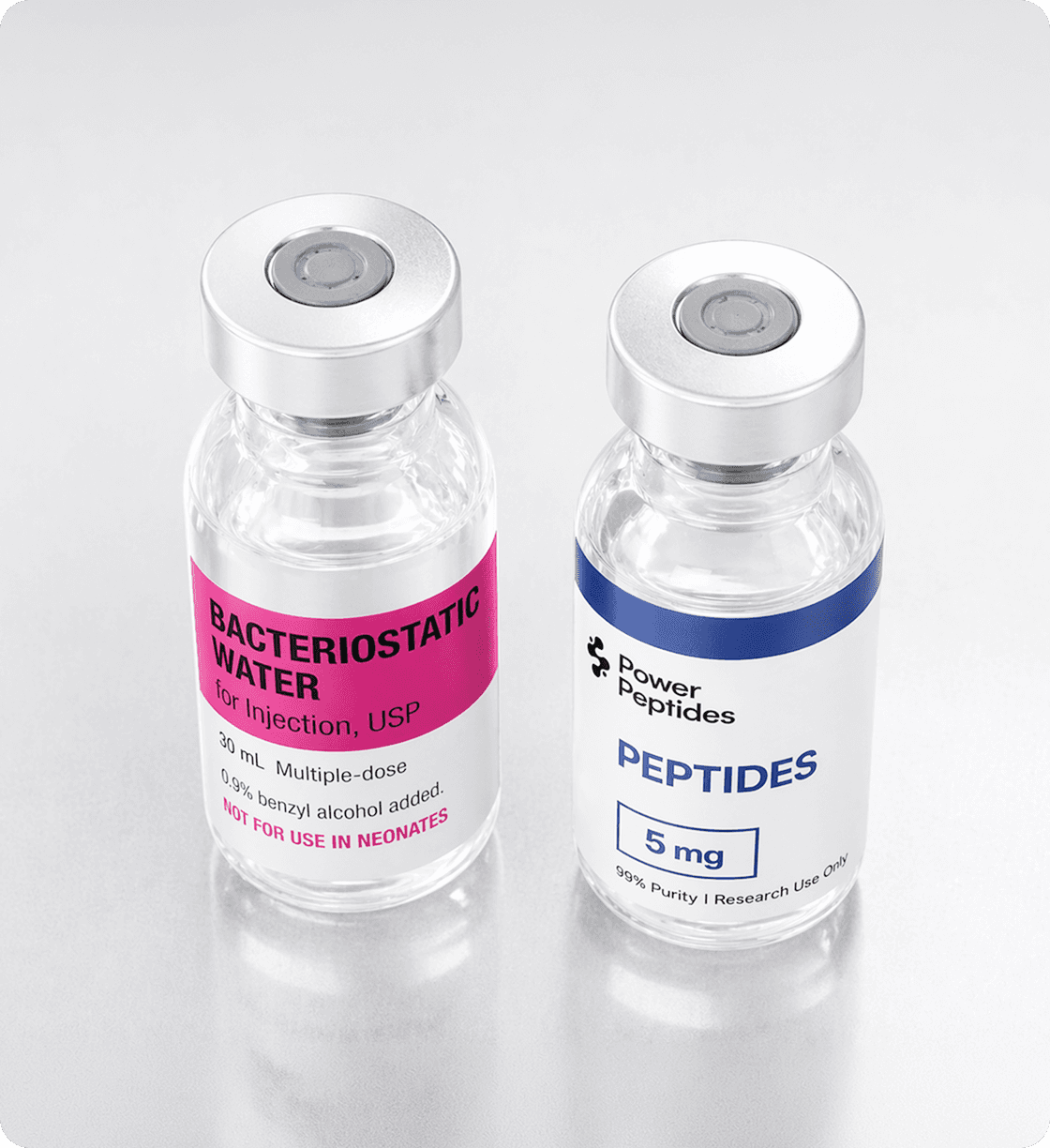
Visuel de guide peptides
55 sujets de guides peptides populaires

Accès à un guide

$14

Tout guide disponible

Accès complet à vie

$99

Tous les guides — bibliothèque actuelle + future

Les guides peptides les plus vendus

Commencez par les guides éducatifs les plus populaires de la bibliothèque, puis explorez le reste du catalogue ci-dessous.

Comparer les accès

Plus de guides peptides

Explorez toute la bibliothèque de guides peptides. Chaque guide suit le même format éducatif et peut être acheté individuellement.
55 sujets au total
Ipamorelin Guide aperçu

Ipamorelin Guide

$14

Free Ipamorelin guide: how it works, what studies report, reported dosage ranges, half-life, side effects and reconstitution math.

Semaglutide Guide aperçu

Semaglutide Guide

$14

Semaglutide explained — metabolic and GLP-1 research. Evidence status, reported dosage ranges, reconstitution math, storage and named stacks.

Tirzepatide Guide aperçu

Tirzepatide Guide

$14

Tirzepatide: mechanism, reported effects, commonly cited dosage ranges, reconstitution math and named stacks — metabolic and incretin research.

Retatrutide Guide aperçu

Retatrutide Guide

$14

Free Retatrutide guide: how it works, what studies report, reported dosage ranges, half-life, side effects and reconstitution math.

Tesamorelin Guide aperçu

Tesamorelin Guide

$14

Tesamorelin explained — body-composition and endocrine research. Evidence status, reported dosage ranges, reconstitution math, storage and named stacks.

Sermorelin Guide aperçu

Sermorelin Guide

$14

Sermorelin: mechanism, reported effects, commonly cited dosage ranges, reconstitution math and named stacks — growth-hormone-axis research.

Thymosin Alpha-1 Guide aperçu

Thymosin Alpha-1 Guide

$14

Free Thymosin Alpha-1 guide for immune research: how it works, what studies report, reported dosage ranges, half-life, side effects and reconstitution math.

PT-141 Guide aperçu

PT-141 Guide

Libre d’accès

PT-141 explained — melanocortin research. Evidence status, reported dosage ranges, reconstitution math, storage and named stacks.

Oxytocin Guide aperçu

Oxytocin Guide

$14

Oxytocin: mechanism, reported effects, commonly cited dosage ranges, reconstitution math and named stacks — social-bonding and reproductive research.
Epithalon Guide aperçu

Epithalon Guide

$14

Free Epithalon guide for cellular-aging research: how it works, what studies report, reported dosage ranges, half-life, side effects and reconstitution math.

KPV Guide aperçu

KPV Guide

$14

KPV explained — skin, gut, and inflammatory research. Evidence status, reported dosage ranges, reconstitution math, storage and named stacks.

Selank Guide aperçu

Selank Guide

Libre d’accès

Selank: mechanism, reported effects, commonly cited dosage ranges, reconstitution math and named stacks — neurocognitive research.

Semax Guide aperçu

Semax Guide

$14

Free Semax guide for neurocognitive research: how it works, what studies report, reported dosage ranges, half-life, side effects and reconstitution math.

DSIP Guide aperçu

DSIP Guide

$14

DSIP explained — sleep and neuroendocrine research. Evidence status, reported dosage ranges, reconstitution math, storage and named stacks.

Kisspeptin-10 Guide aperçu

Kisspeptin-10 Guide

$14

Kisspeptin-10: mechanism, reported effects, commonly cited dosage ranges, reconstitution math and named stacks — reproductive-axis research.

ARA-290 Guide aperçu

ARA-290 Guide

Libre d’accès

Free ARA-290 guide: how it works, what studies report, reported dosage ranges, half-life, side effects and reconstitution math.

5-Amino-1MQ Guide aperçu

5-Amino-1MQ Guide

Libre d’accès

5-Amino-1MQ explained — metabolic research. Evidence status, reported dosage ranges, reconstitution math, storage and named stacks.

MOTS-c Guide aperçu

MOTS-c Guide

Libre d’accès

MOTS-c: mechanism, reported effects, commonly cited dosage ranges, reconstitution math and named stacks — mitochondrial and metabolic research.
SS-31 Guide aperçu

SS-31 Guide

$14

Free SS-31 guide: how it works, what studies report, reported dosage ranges, half-life, side effects and reconstitution math.

IGF-1 LR3 Guide aperçu

IGF-1 LR3 Guide

$14

IGF-1 LR3 explained — growth-factor and anabolic-signaling research. Evidence status, reported dosage ranges, reconstitution math, storage and named stacks.

Glutathione Guide aperçu

Glutathione Guide

$14

Glutathione: mechanism, reported effects, commonly cited dosage ranges, reconstitution math and named stacks — oxidative-stress and detoxification research.
SLU-PP-332 Guide aperçu

SLU-PP-332 Guide

Libre d’accès

Free SLU-PP-332 guide: how it works, what studies report, reported dosage ranges, half-life, side effects and reconstitution math.

GHRP-2 Guide aperçu

GHRP-2 Guide

Libre d’accès

GHRP-2 explained — growth-hormone-secretagogue and ghrelin-receptor research. Evidence status, reported dosage ranges, reconstitution math, storage and named stacks.

GHRP-6 Guide aperçu

GHRP-6 Guide

Libre d’accès

GHRP-6: mechanism, reported effects, commonly cited dosage ranges, reconstitution math and named stacks — growth-hormone-secretagogue and appetite-signaling research.
Melanotan II Guide aperçu

Melanotan II Guide

Libre d’accès

Free Melanotan II guide: how it works, what studies report, reported dosage ranges, half-life, side effects and reconstitution math.

Mod GRF 1-29 (CJC-1295 No DAC): Dosage, Reconstitution and Reading a Test Report aperçu

Mod GRF 1-29 (CJC-1295 No DAC): Dosage, Reconstitution and Reading a Test Report

$14

Mod GRF 1-29 / CJC-1295 no DAC: the only human CJC-1295 study tested the DAC version at 60-90 mcg/kg, the unmeasured half-life, unit math, and what a purity report can establish.
NA-Semax Amidate Guide aperçu

NA-Semax Amidate Guide

Libre d’accès

NA-Semax Amidate: mechanism, reported effects, commonly cited dosage ranges, reconstitution math and named stacks — neuroprotective and cognitive-signaling research.
N-Acetyl Selank Amidate: COA, Purity and the Mass That Tells It From Selank aperçu

N-Acetyl Selank Amidate: COA, Purity and the Mass That Tells It From Selank

$14

N-Acetyl Selank Amidate: the +41 Da mass difference a certificate of analysis must show, why purity cannot establish identity, the salt-form correction to every concentration, and the two figures this page retracted.
Gonadorelin Guide aperçu

Gonadorelin Guide

Libre d’accès

Gonadorelin explained — hypothalamic-pituitary-gonadal (HPG) axis research. Evidence status, reported dosage ranges, reconstitution math, storage and named stacks.

Cagrilintide: Dosage in Units, Reconstitution Chart and the 2026 Phase 3 Record aperçu

Cagrilintide: Dosage in Units, Reconstitution Chart and the 2026 Phase 3 Record

$14

Cagrilintide: the dosing chart in insulin-syringe units, the sourced 159-195 hour half-life, and what the 2026 REIMAGINE and REDEFINE phase 3 trials measured — including the 0.16-point HbA1c result.
NAD+ Guide aperçu

NAD+ Guide

Libre d’accès

Free NAD+ guide: how it works, what studies report, reported dosage ranges, half-life, side effects and reconstitution math.

LL-37 Guide aperçu

LL-37 Guide

Libre d’accès

LL-37 explained — antimicrobial, wound-repair, and immune-modulation research. Evidence status, reported dosage ranges, reconstitution math, storage and named stacks.

Cartalax Guide aperçu

Cartalax Guide

Libre d’accès

Cartalax (AED, Ala-Glu-Asp): the sequence it is actually indexed under, what its six published cell-culture studies tested, reported dosage ranges, reconstitution math and named stacks.

Thymalin Guide aperçu

Thymalin Guide

Libre d’accès

Free Thymalin guide for thymic and immune-modulation research: how it works, what studies report, reported dosage ranges, half-life, side effects and reconstitution math.

Thymulin Guide aperçu

Thymulin Guide

Libre d’accès

Thymulin (FTS-Zn): the zinc-dependent thymic nonapeptide — how it differs from Thymalin, what the two double-blind human trials actually found, published trial doses, reconstitution math and storage.

MGF (Mechano Growth Factor): Dosage, Reconstitution and the Replication That Failed aperçu

MGF (Mechano Growth Factor): Dosage, Reconstitution and the Replication That Failed

$14

MGF, the IGF-1Ec E-peptide: two pharmaceutical companies could not reproduce its claimed effect, no half-life has ever been measured, and the active research on it is oncology. PEG-MGF has its own guide.
Follistatin 344 Guide aperçu

Follistatin 344 Guide

Libre d’accès

Follistatin 344: mechanism, reported effects, commonly cited dosage ranges, reconstitution math and named stacks — myostatin-inhibition and muscle-mass research.
Hexarelin Guide aperçu

Hexarelin Guide

$14

Free Hexarelin guide: how it works, what studies report, reported dosage ranges, half-life, side effects and reconstitution math.

VIP Guide aperçu

VIP Guide

$14

VIP explained — immune-modulation and inflammatory research. Evidence status, reported dosage ranges, reconstitution math, storage and named stacks.

PE-22-28 Guide aperçu

PE-22-28 Guide

Libre d’accès

PE-22-28: mechanism, reported effects, commonly cited dosage ranges, reconstitution math and named stacks — TREK-1 channel and mood/neurogenesis research.
AHK-Cu Guide aperçu

AHK-Cu Guide

Libre d’accès

Free AHK-Cu guide: how it works, what studies report, reported dosage ranges, half-life, side effects and reconstitution math.

Melanotan I Guide aperçu

Melanotan I Guide

$14

Melanotan I explained — melanocortin and skin-pigmentation research. Evidence status, reported dosage ranges, reconstitution math, storage and named stacks.

AOD-9604: The Failed Phase 2b, Dosage, Reconstitution and Regulatory Status aperçu

AOD-9604: The Failed Phase 2b, Dosage, Reconstitution and Regulatory Status

$14

AOD-9604: the confirmatory Phase 2b that missed its endpoint, why every human trial was oral or IV, reported dosage, reconstitution math and stacks.

HGH Fragment 176-191: Foundational Research Guide aperçu

HGH Fragment 176-191: Foundational Research Guide

$14

HGH Fragment 176-191: what its own cited sources actually show, how it differs from AOD-9604 and the 177-191 sequence, dosage and reconstitution math.

Pinealon (EDR Peptide) Foundational Guide aperçu

Pinealon (EDR Peptide) Foundational Guide

$14

Pinealon (EDR): the Khavinson short-peptide literature and who produced it, the rodent-to-human dose gap, reported dosage and reconstitution math.

Dihexa (PNB-0408): Critical Evidence Review aperçu

Dihexa (PNB-0408): Critical Evidence Review

$14

Dihexa: the retracted literature behind the nootropic claims, the unresolved tumour-growth concern, why it needs DMSO rather than bacteriostatic water.
PEG-MGF (PEGylated Mechano Growth Factor) aperçu

PEG-MGF (PEGylated Mechano Growth Factor)

$14

PEG-MGF: what PEGylation does and does not change, the unmeasured half-life claim, the vendor non-standardisation problem, and reconstitution math.

Cerebrolysin: Trial Dosage, the CASTA Null Result and Why Nothing Here Is Reconstituted aperçu

Cerebrolysin: Trial Dosage, the CASTA Null Result and Why Nothing Here Is Reconstituted

$14

Cerebrolysin: a porcine brain hydrolysate, not a peptide — the trial infusion regimens, the 1,070-patient CASTA null result, Cochrane's dose-linked adverse-event finding, and why no reconstitution math applies.

Mazdutide (IBI362, LY3305677) Guide: Trial Doses, the 9 mg Trade-Off and Reconstitution aperçu

Mazdutide (IBI362, LY3305677) Guide: Trial Doses, the 9 mg Trade-Off and Reconstitution

Libre d’accès

Mazdutide (IBI362 / LY3305677): the glucagon/GLP-1 dual agonist approved in China in 2025 — the 4 mg, 6 mg and 9 mg phase 3 doses, what 9 mg cost in adverse events, and the reconstitution math.

Survodutide (BI 456906) Guide: Dosage, Titration and the Phase 3 Evidence aperçu

Survodutide (BI 456906) Guide: Dosage, Titration and the Phase 3 Evidence

$14

Survodutide (BI 456906): the investigational glucagon/GLP-1 dual agonist — what SYNCHRONIZE-1 reported at 3.6 mg and 6.0 mg weekly, the months-long titration, and the reconstitution math.

P11-4 (Curodont, Oligopeptide-104): The Self-Assembling Dental Peptide, Explained aperçu

P11-4 (Curodont, Oligopeptide-104): The Self-Assembling Dental Peptide, Explained

Libre d’accès

P11-4 (Curodont, oligopeptide-104): a self-assembling dental enamel biomaterial — applied to a tooth surface rather than injected, and not systemic.

Guides transversaux

Deux guides indépendants couvrent la matière qui n’appartient à aucun composé en particulier — comment les combinaisons sont construites et comment se lit le bilan sanguin qui les mesure. Les deux sont inclus dans l’Accès complet à vie.

$39 l’unité
Peptide Stacking Guide aperçuGuide indépendant

Peptide Stacking Guide

$39

The cross-compound stacking reference: the named blends, which pairings are redundant rather than additive, where interaction risk is documented versus merely unstudied, and the blend arithmetic.

Peptide Blood Marker Guide aperçuGuide indépendant

Peptide Blood Marker Guide

$39

Which blood markers matter on peptides, how each one is read against your own baseline rather than a population range, and the marker map for every compound in the library.

Choisissez votre accès

Choisissez l’accès à un guide pour n’importe quel guide actuellement disponible, ou l’accès à vie à l’ensemble de la bibliothèque, qui inclut les parutions de guides actuelles et futures.

Accès Standard à un guide

$14

Accès à un sujet de guide à la fois. L’ajout rapide s’affiche ci-dessous pour les guides disponibles.

  • La page de guide complète en libre accès, pour chaque composé
  • L’Evidence File, le Sourcing File et la Benefit & Outcome Review de ce composé
  • Le Stacking Module de ce composé

Accès complet à vie

$99

Accès à l’ensemble de la bibliothèque : les 55 guides — parutions actuelles et futures — plus les ressources téléchargeables.

  • Chaque guide de la bibliothèque — les 55 sujets débloqués
  • Parutions de guides actuelles et futures de la bibliothèque incluses
  • Pack de référence PDF téléchargeable
  • Pack de fiches imprimables pour un usage hors ligne

Comment la bibliothèque est structurée

La bibliothèque utilise un format reproductible en douze sections pour chaque guide : ce qu’est le composé et comment il agit, les effets et les effets indésirables rapportés dans la recherche, le niveau de preuve et le statut réglementaire, les fourchettes de dosage couramment citées, les calculs de reconstitution avec calculateur intégré, la demi-vie, les associations nommées, la conservation et les références qui étayent l’ensemble.

Sections 1–4

De quoi il s’agit et comment il agit

Le composé, son mécanisme, les effets rapportés dans la recherche, ainsi que son niveau de preuve et son statut réglementaire.

Sections 5–8

Les chiffres pratiques

Les fourchettes de dosage couramment citées dans la recherche, les calculs de reconstitution avec calculateur intégré, les bases d’administration et la demi-vie — des exemples de ce qui est rapporté, pas des instructions.

Sections 9–12

Précautions, associations et sources

Les effets indésirables rapportés, les associations nommées, la conservation et les références sources — la même structure pour les 55 guides.

Tableau de référence de dosage des peptides — les 55 composés

Un tableau de référence gratuit couvrant chaque composé de la bibliothèque en un seul tableau — sans compte, sans téléchargement. Chaque ligne indique la fourchette couramment rapportée pour ce composé et sa demi-vie plasmatique, avec un lien vers le guide complet et vers un calculateur de reconstitution gratuit. Les lignes sont générées à partir du contenu même des guides plutôt que maintenues dans un tableau séparé, si bien que le tableau ne peut pas contredire les pages qu’il résume ; lorsqu’une cellule affiche un tiret, le chiffre est indiqué sur la page du guide sous une forme que ce tableau ne peut pas condenser, et c’est le guide qui fait référence.

Deux points à lire attentivement. Ce sont des exemples de ce qui est rapporté dans la recherche publiée et les sources communautaires — ce ne sont ni des recommandations, ni des instructions d’usage personnel, ni une dose pour qui que ce soit. Et lorsqu’il n’existe aucune étude pharmacocinétique humaine publiée, la colonne demi-vie l’indique plutôt que de répéter un chiffre qui circule sans source ; plusieurs demi-vies de peptides largement citées n’ont jamais été mesurées chez l’humain.

Tableau de référence des fourchettes couramment rapportées et des demi-vies plasmatiques pour chaque peptide de la bibliothèque de guides Medibact
ComposéFourchette couramment rapportée (exemple, pas une recommandation)Demi-vie plasmatiqueGuide
5-Amino-1MQCommunity sources describe oral doses of roughly 50–150 mg per day — anecdotal, not derived from any human study. Mouse efficacy work used 10 and 32 mg/kg/day subcutaneously.Measured in mice in 2024, not in humans: terminal half-life 6.3 h after intravenous dosing, 12.8–13.3 h subcutaneous, 14.8 h oral.5-Amino-1MQ guide
AHK-CuTopical: 2-5% scalp serum; subcutaneous (community-reported): ~50-200 mcg dailyNot formally established in humans; small copper-peptide complexes are believed to clear rapidlyAHK-Cu guide
AOD-9604250-500 mcg/day subcutaneously (~300 mcg the modal figure) — no published human trial or pharmacokinetic study supports this route or doseAOD-9604 guide
ARA-290Phase 2 trials tested 1, 4 and 8 mg daily by subcutaneous injection; 4 mg met the primary endpointVery short - reported on the order of minutesARA-290 guide
BPC-157~250–500 mcg per day (community-reported; some report split AM/PM dosing).Reported under 30 minutes.BPC-157 guide
Cagrilintide0.16, 0.30, 0.60, 1.2, 2.4 and 4.5 mg once weekly in phase 1b dose-ranging; 1.0 mg and 2.4 mg once weekly are the two doses carried into the 2026 phase 3 program.159-195 hours (about 6.6-8.1 days) across 0.16-4.5 mg, with median tmax 24-72 hours.Cagrilintide guide
CartalaxRoughly 1–2 mg/day subcutaneous or 10–20 mg/day oral in community write-ups. These figures trace to vendor and forum sources, not to any published study — no published work has administered…Not established in any species. No pharmacokinetic study of AED has been published, so there is no measured half-life, clearance or bioavailability…Cartalax guide
CerebrolysinThe trial regimens, all intravenous: 30 mL/day in 100 mL saline for 10 days (stroke, the CASTA regimen); 50 mL/day for 10 days then two cycles of 10 mL/day (CAPTAIN, TBI);Not established, and arguably not a well-formed question for a mixture. PubMed records pairing cerebrolysin with pharmacokinetics or half-life are…Cerebrolysin guide
CJC-1295DAC form — 30, 60 and 90 mcg/kg as single subcutaneous injections across two trials (PMID 16352683, PMID 17018654) — roughly 2,100, 4,200 and 6,300 mcg for a 70 kg adult.DAC form: 5.8-8.1 days (PMID 16352683). No-DAC form: no published human measurement — see below.CJC-1295 guide
DihexaCommunity and grey-market reports cluster at 5-10 mg daily described as "low" and 10-20 mg daily described as "moderate", for 4-8 weeks.Dihexa guide
DSIPCommunity sources describe roughly 100-250 mcg subcutaneously before bed; the human trials instead used about 25 nmol/kg intravenously.Reported at roughly 7-15 minutes in early intravenous human work — very short, and a poor match for a compound expected to act across a night.DSIP guide
EpithalonCommunity examples of roughly 5-10 mg per day for short courses (no established human dose)Very short - minutes; no established human pharmacokinetic profileEpithalon guide
Follistatin 344Community-reported figures cluster around 100 mcg per administration. There is no trial dose to report because no published trial has injected follistatin protein into a human — the figures…No published pharmacokinetic study of injected, unmodified follistatin in humans could be located.Follistatin 344 guide
GHK-CuTopical formulations commonly 0.05-2%; injectable research examples around 1-2 mg per administration (no established human dose)Short - GHK is cleared rapidly from plasma; no well-established human half-life for the copper complexGHK-Cu guide
GHRP-2100-300 mcg per injection (community-reported examples)Approximately 1-2 hours (GH pulse peaks 15-30 minutes post-dose)GHRP-2 guide
GHRP-6100-300 mcg per injection (community-reported saturation dose ~1 mcg/kg)Reported ~15-20 minutes (short); some sources cite a terminal phase up to ~2.5 hoursGHRP-6 guide
GlutathioneCommunity injection reports describe ~200-600 mg per session, 1-3x weekly. The doses with data behind them are 1,400 mg IV three times weekly (Parkinson's trial, null result) and 250-500 mg…Measured at 14.1 +/- 9.2 minutes in 10 healthy volunteers after a 2 g/m2 intravenous infusion (Eur J Clin Invest 1991)Glutathione guide
Gonadorelin~50-200 mcg per injection in community and research reports (not a recommendation)Very short: ~2-10 min distribution, ~10-40 min terminalGonadorelin guide
Hexarelin100-200 mcg per subcutaneous injection is the range described in community sources (not a recommendation, and not what the trials used)Reported at roughly 55-80 minutes — a figure that circulates widely but is not stated in the abstracts of the human trials most often cited for itHexarelin guide
HGH Fragment 176-191250-500 mcg per injection in community settings; 250 mcg is the near-universal reported starting point.HGH Fragment 176-191 guide
IGF-1 LR3~20-100 mcg per day in community write-ups. No validated human dose exists and no dose-finding study has ever been runNot established in humans. The widely repeated "20-30 hours" is unsourced and points the wrong way - see the half-life section, where the FDA label…IGF-1 LR3 guide
Ipamorelin~100–300 mcg per dose (community-reported).Reported ~2 hours.Ipamorelin guide
Kisspeptin-10Published human work used intravenous infusion, e.g. 1.5 mcg/kg/h in George et al. 2011; community-reported subcutaneous figures (~50-200 mcg) are anecdotal and have no trial behind them.No established human figure. In vitro the peptide decomposes with a half-life of 1.7 min at 37 C (Liu 2013);Kisspeptin-10 guide
KPVRoughly 250-500 mcg per day subcutaneously, sometimes split into two administrations; oral protocols are discussed at milligram amounts.No published human pharmacokinetic study reports one. The figures circulating on commercial pages are not traceable to a measurement.KPV guide
LL-37~100–500 mcg per administration in community reports (no established human protocol)Short; estimated on the order of ~1 hour, highly dependent on proteolysisLL-37 guide
Mazdutide4 mg and 6 mg once weekly in GLORY-1 and in both DREAMS phase 3 trials; 9 mg once weekly in GLORY-2; 3 mg, 4.5 mg and 6 mg in the phase 2 programme; a 32-person phase 1 escalated to 16 mg.Not established in the indexed literature. A PubMed search pairing mazdutide — or either development code, which return the same record set — with…Mazdutide guide
Melanotan IOne 16 mg implant, repeated every 60 days in the pivotal trials — a solid, white to off-white, bioresorbable sterile rod approximately 1.7 cm long and 1.45 mm in diameter, inserted…No published figure for injected melanotan 1 — the compound was developed as a controlled-release implant, so the pharmacokinetics that were…Melanotan I guide
Melanotan II~250–500 mcg per dose in community reportsReported short, roughly 30 minutes to ~1 hourMelanotan II guide
MGF200-400 mcg per injection in community reports, with a wider span of roughly 100-600 mcg. No trial of any kind establishes a dose for this peptide.Never measured. No published pharmacokinetic study reports a half-life for the MGF E-peptide in any species.MGF guide
Mod GRF 1-29~100 mcg per injection is the figure the market repeats as a 'saturation dose'; reported protocols span roughly 100-300 mcg. No trial establishes this range for the no-DAC peptide.No measured value has been published for this peptide. The ~30 minutes commonly quoted is an inference from DPP-IV resistance, not a measurement;Mod GRF 1-29 guide
MOTS-cRoughly 5-10 mg per administration in research-community discussion, with no published human dose behind it.MOTS-c guide
NA-Selank Amidate~250–900 mcg per day in divided applications, intranasal, from community sources rather than from any trial.Not established; the widely repeated "20–30 minutes" is leu-enkephalin's half-life, not Selank's, and is withdrawn here.NA-Selank Amidate guide
NA-Semax AmidateRoughly 300–900 mcg per day in vendor and community protocols, often split across one to three administrations.Not established for the analog, and poorly established for Semax itself. The one indexed measurement — Semax incubated with rat brain plasma…NA-Semax Amidate guide
NAD+50-100 mg subcutaneous per injection (community-reported); higher amounts reported for IV in clinical settings.Short; serum half-life reported under ~1 hour, with rapid intracellular uptake.NAD+ guide
OxytocinIntranasal research most often uses 24 IU per administration; the largest trial used 48 IU daily. Research-vial reports describe roughly 100-200 mcg. No validated non-obstetric doseAbout 1 to 6 minutes per the FDA-approved label, decreased further in late pregnancy and during lactationOxytocin guide
P11-4Not established, and not a meaningful parameter for this compound. There is no human pharmacokinetic data because it is never given systemically.P11-4 guide
PE-22-2850-200 mcg per administration is what circulates in community and vendor material. No human dose exists.Not established for PE-22-28 in any species. The frequently quoted '23 hours' is NOT a half-life and is NOT PE-22-28 — it is a half-time of…PE-22-28 guide
PEG-MGF200-400 mcg per administration in community and research-setting reports. No dose has ever been established in any species for the PEGylated form.PEG-MGF guide
Pinealon1-2 mg once daily subcutaneously (a minority report 5-10 mg/day); oral capsules approximately 1-20 mg/day in the Khavinson consumer line.Pinealon guide
PT-1411.75 mg subcutaneously into the abdomen or thigh, as needed, at least 45 minutes before anticipated sexual activity.Approximately 2.7 hours, with a reported range of 1.9 to 4.0 hours. Tmax is about 1 hour. These are measured label values, not estimates.PT-141 guide
RetatrutidePhase 2 escalated to 12 mg once weekly; the published phase 3 used fixed 4 mg, 9 mg and 12 mg arms (reported, not an established dose).No numeric half-life appears in the published phase 1 abstract; it reports a PK profile 'supporting once-weekly dosing' and a weight effect…Retatrutide guide
SelankResearch and community examples of roughly 250-500 mcg per administration (no established Western dose)No primary pharmacokinetic study establishing a plasma half-life for Selank was located in any species;Selank guide
SemaglutideLabel escalation 0.25 to 2.4 mg once weekly (Wegovy); maintenance 1.7 or 2.4 mg once weeklyApproximately 1 week (elimination half-life about 155 hours)Semaglutide guide
SemaxCommunity figures cluster around 300-600 mcg per administration; the registered Russian product is a 0.1% or 1% intranasal drop, dosed in drops rather than by weight.Minutes. The Pro-Gly-Pro tail slows degradation relative to the bare ACTH fragment but does not make it long-lived.Semax guide
Sermorelin30 micrograms per kilogram per day, subcutaneously at bedtime, in growth-hormone-deficient children.Very short and properly measured: an initial phase of about 1.9 +/- 0.2 minutes and an elimination phase of about 10.4 +/- 0.2 minutes for…Sermorelin guide
SLU-PP-332No human dose is established. There is no human pharmacokinetic study, no dose-response data and no bioavailability figure for any route in humans.Unknown in humans — no human pharmacokinetic study of SLU-PP-332 has been published, so any specific human figure is unsourced.SLU-PP-332 guide
SS-3140 mg subcutaneously once daily, at the same time each day, in patients weighing at least 30 kg; reduced in severe renal impairment.The label does not state one. It gives Tmax, bioavailability, distribution, metabolism and complete urinary recovery by 48 hours, but no elimination…SS-31 guide
SurvodutideThe doses with phase 3 data behind them are 3.6 mg and 6.0 mg subcutaneously once weekly, each reached by titration from 0.3 mg.Consistent with once-weekly dosing, but we could not source a specific published half-life figure from the trial reports checked.Survodutide guide
TB-500Roughly 2-5 mg per administration during a reported loading phase, then a lower weekly figure. These are community-reported numbers with no human dose-finding study behind them - the trial…No published human half-life exists for the fragment. Figures of roughly 2-3 hours circulating online belong to the parent protein, and the new…TB-500 guide
TesamorelinLabel 1.28–2 mg/day across Egrifta formulations; off-label reports ~1–2 mg/day (examples, not recommendations).8 min (Egrifta SV) / 11 min (Egrifta WR) per label; ~26–38 min reported for the original formulation.Tesamorelin guide
Thymalin5-10 mg per day (community and Russian clinical protocols); reconstitution here is concentration math only, not a personal dose.Not well characterized; individual peptide fractions are reported to clear rapidly (minutes to a few hours), while biological effects are reported to…Thymalin guide
Thymosin Alpha-11.6 mg subcutaneously twice weekly. This is the figure used in registered trials, not a recommendation.Approximately 2 hours, with peak serum concentration within 2 hours and levels back to baseline within 24 hours (Ancell et al., 2001).Thymosin Alpha-1 guide
Thymulin1, 5 and 10 mg/day were compared in the RA trials, with 5 mg/day the most effective arm. These are published trial figures, not recommendations.Not established — no published human pharmacokinetic study reports a half-life figure for thymulin.Thymulin guide
TirzepatideLabel starts at 2.5 mg once weekly; maintenance doses are 5, 10 or 15 mg once weeklyApproximately 5 days (about 117 hours)Tirzepatide guide
VIPCommunity intranasal protocols report 50 mcg per nostril up to 4x daily (~400 mcg/day); subcutaneous examples of 25-100 mcg once daily.Consistently described as very short, which is why every trial infused it rather than injecting a bolus.VIP guide

La plupart sont fournis sous forme de poudre lyophilisée, et leur reconstitution nécessite de l’eau bactériostatique et l’arithmétique de concentration qui l’accompagne — la concentration en mg/mL est le contenu du flacon en milligrammes divisé par les millilitres ajoutés. Quelques-uns ne sont pas reconstitués du tout et l’indiquent sur leur propre page. Utiliser le calculateur de dosage gratuit ou acheter de l’eau bactériostatique de qualité USP.

FAQ

Que contient un guide peptides Medibact ?

Chaque guide suit la même structure en douze sections : ce qu’est le composé, comment il agit, les effets rapportés dans la recherche, le niveau de preuve et le statut réglementaire, les fourchettes de dosage couramment citées dans les études et la pratique, les calculs de reconstitution avec calculateur intégré, les bases d’administration, la demi-vie, les effets indésirables rapportés, les associations nommées, la conservation et les références sources. L’accès à un guide ajoute l’Evidence File, le Sourcing File et la Benefit & Outcome Review de ce composé ; l’Accès complet ajoute ces fichiers pour chaque composé, plus les fiches protocole imprimables. Les guides sont un matériel de référence éducatif — les chiffres de dosage sont des exemples de ce qui est rapporté, pas des instructions d’usage personnel.

Existe-t-il un tableau de dosage des peptides ou un PDF téléchargeable ?

La Protocol Sheet et l’Injection Log imprimables — référence de reconstitution, exemple de protocole rapporté, bases d’injection, associations courantes et conservation — sont fournies avec l’Accès complet à vie, qui couvre chaque composé de la bibliothèque plus les parutions futures. L’accès à un guide constitue le contenu écrit approfondi pour un seul composé : son Evidence File, son Sourcing File et sa Benefit & Outcome Review.

Combien de peptides la bibliothèque de guides couvre-t-elle ?

55 sujets de guides peptides à ce jour, couvrant des composés tels que BPC-157, TB-500, GHK-Cu, CJC-1295, Semaglutide, Tirzepatide et Retatrutide. L’Accès complet à vie inclut aussi les parutions futures de guides à mesure que la bibliothèque s’enrichit.

Quelle est la différence entre l’accès à un guide et l’Accès complet à vie ?

L’accès Standard à un guide débloque les trois fichiers payants d’un composé : l’Evidence File, le Sourcing File et la Benefit & Outcome Review. L’Accès complet à vie les débloque pour l’ensemble de la bibliothèque — guides actuels et futurs — plus le pack de référence PDF téléchargeable et le pack de fiches imprimables.

Ces guides fournissent-ils des instructions de dosage personnelles ?

Non. Les guides sont exclusivement un matériel de référence éducatif en contexte de recherche. Ils ne fournissent aucune instruction de dosage, d’administration ni de protocole à usage personnel.

Y a-t-il un tableau de dosage des peptides gratuit sur cette page ?

Oui — le tableau de référence ci-dessus est gratuit, ne nécessite aucun compte et couvre les 55 composés de la bibliothèque en un seul tableau, avec pour chacun la fourchette couramment rapportée et la demi-vie plasmatique, ainsi qu’un lien vers le guide complet. Il est généré à partir du contenu même des guides plutôt que maintenu séparément, il ne peut donc pas contredire les pages individuelles ; un tiret signifie que le chiffre est indiqué sur la page du guide sous une forme que le tableau ne peut pas condenser. Les chiffres sont des exemples de ce qui est rapporté dans la recherche et les sources communautaires, pas des instructions d’usage personnel.

Qu’est-ce que la demi-vie d’un peptide et pourquoi figure-t-elle dans le tableau ?

La demi-vie est le temps nécessaire pour que la concentration plasmatique d’un composé diminue de moitié, et c’est le chiffre qui conditionne le plus la manière dont un composé est étudié — c’est la raison pour laquelle Sermorelin, éliminé en une dizaine de minutes, a été évalué en essai clinique sous forme d’une injection quotidienne au coucher, alors qu’un analogue à action prolongée ne l’est pas. Elle figure dans le tableau parce que c’est le chiffre le plus recherché et le plus souvent mal cité de cette catégorie. Lorsqu’il n’existe aucune étude pharmacocinétique humaine, le tableau l’indique plutôt que de répéter un nombre qui circule sans source.

Comment calcule-t-on une dose de peptide à partir d’un flacon reconstitué ?

La concentration en mg par mL est égale au contenu du flacon en milligrammes divisé par les millilitres d’eau bactériostatique ajoutés ; les unités de seringue valent alors (quantité cible ÷ concentration) × 100, car une seringue à insuline U-100 de 1 mL est graduée en 100 unités sur un millilitre. Un flacon de 10 mg mélangé à 2 mL donne 5 mg/mL, une quantité de 5 mg correspond donc à 100 unités — une seringue pleine. Medibact publie une page de calculateur autonome gratuite pour 51 des 55 composés de la bibliothèque ; les exceptions sont ceux qui ne sont pas reconstitués du tout. Il s’agit d’arithmétique de concentration, pas de conseils de dosage.

Les guides reposent-ils sur la recherche publiée ou sur des rapports communautaires ?

Les deux, et chaque guide les distingue explicitement plutôt que de les mélanger. Lorsqu’une notice approuvée par la FDA existe — comme c’est le cas pour SS-31 (Forzinity), PT-141 (Vyleesi) et tesamorelin (Egrifta) —, la dose approuvée, la pharmacocinétique et le tableau des effets indésirables sont repris de la notice et cités comme tels. Lorsque des données d’essai existent sans approbation, le guide cite l’essai, y compris les essais négatifs et interrompus. Lorsque seuls des rapports communautaires existent, le guide le dit clairement et explique d’où viennent les chiffres. Plusieurs guides indiquent qu’aucune demi-vie humaine publiée n’existe plutôt que de répéter un nombre sans source.

À titre éducatif uniquement — ceci ne constitue pas un avis médical. Cette page résume des informations issues de la recherche publiée et des discussions spécialisées, à des fins éducatives. Elle ne constitue ni un avis médical ni une recommandation d’utiliser une quelconque substance. Les quantités, les schémas d’administration ou les associations mentionnés sont des exemples de ce qui a été rapporté, et non des instructions qui vous seraient destinées. Beaucoup des peptides décrits ici sont des substances de recherche non autorisées pour les usages évoqués, et leur statut varie selon les pays. Les effets, les risques et le cadre légal varient, tout comme les situations individuelles. Consultez un professionnel de santé qualifié et habilité à exercer avant toute décision. N’utilisez pas ce contenu pour établir vous-même un diagnostic, un traitement ou une posologie.